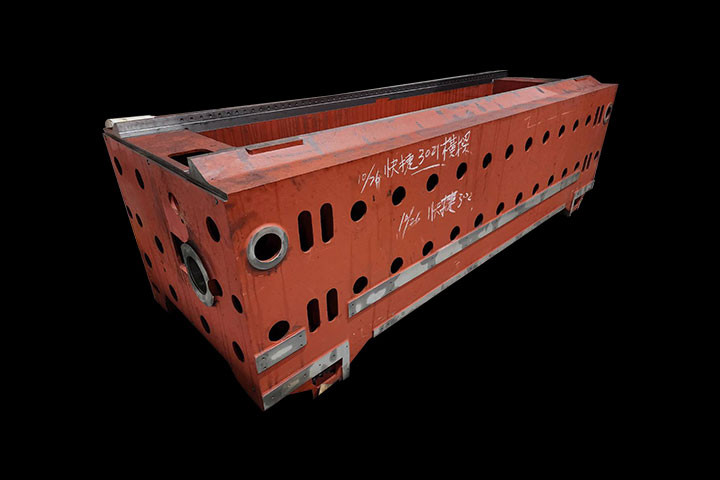
The machining quality of grinding machine components directly affects the precision and service life of the machine tool. Grinding machines themselves require extremely high structural rigidity and guideway accuracy. Therefore, key components such as machine beds, columns, worktables, and slide bases have very strict requirements for flatness, perpendicularity, and guideway mounting surfaces during machining.
The grinding machine components currently produced are primarily structural components for machine tools, including grinding machine beds, columns, worktables, slide bases, and saddles. These components are relatively large and typically require rough machining with a gantry milling machine, followed by precision cutting to achieve the final assembly requirements.
- Grinding Machine Beds and Columns
The machine bed is the foundation of the entire machine and must provide excellent flatness and rigidity. The column supports the spindle head and feed system, making the requirements for perpendicularity and guideway surface accuracy particularly stringent. These two types of components are among the most common workpieces in grinding machines. - Worktables and Slide Bases
The worktable must support the weight of the workpiece while performing reciprocating movements, requiring strict flatness and straightness. The slide base must move precisely along the guideways, and the machining accuracy of its mounting surfaces directly affects grinding performance. - Other Grinding Machine Structural Components
These include saddles, support bases, cover mounting brackets, and other components. Although they are relatively smaller in size, they still require excellent flatness and hole-position accuracy to ensure stable operation after the complete machine is assembled.