
JITO provides customized metal parts processing services, integrating copper casting, copper forging, aluminum forging, CNC precision machining, mold development, and sample production, helping customers complete high-quality metal parts production from product design, blank development, sample verification, to mass production.
Our services cover water fittings, industrial parts, machinery equipment, automotive and motorcycle parts, household hardware, coffee machine parts, electronic components, and special customized part requirements. Whether based on 2D drawings, 3D models provided by customers, or developed from an initial concept, JITO can recommend the most suitable manufacturing process according to product application, material properties, machining precision, and mass production cost.
Through continuous communication with customers to understand their needs, JITO's goal is to become the most trusted solution partner for our customers. When receiving requests for quotation drawings, material changes, process adjustments, additional processes, or urgent order arrangements, our contact team prioritizes handling these requests, continuously "checking" and "confirming" with customers to ensure their needs are truly understood.
To achieve comprehensive communication, cross-departmental cooperation within JITO is essential — the sales, engineering, and quality assurance teams work fully to fulfill our commitments to customers. All resource integration is evaluated with the goal of meeting customer needs and maintaining customer market competitiveness. From sample production to successful mass production, we build long-term partnerships with customers based on mutual trust.
JITO has integrated capabilities in casting, forging, and CNC precision machining, allowing us to help customers evaluate the most suitable manufacturing method from the early development stage, reducing unnecessary processing waste and improving product stability and mass production efficiency.

This discussion and technical review process confirms the feasibility of the required machining and ensures the part can meet the customer's needs.

The mold ensures that the parts produced achieve the required precision and fit properly with other components during assembly.


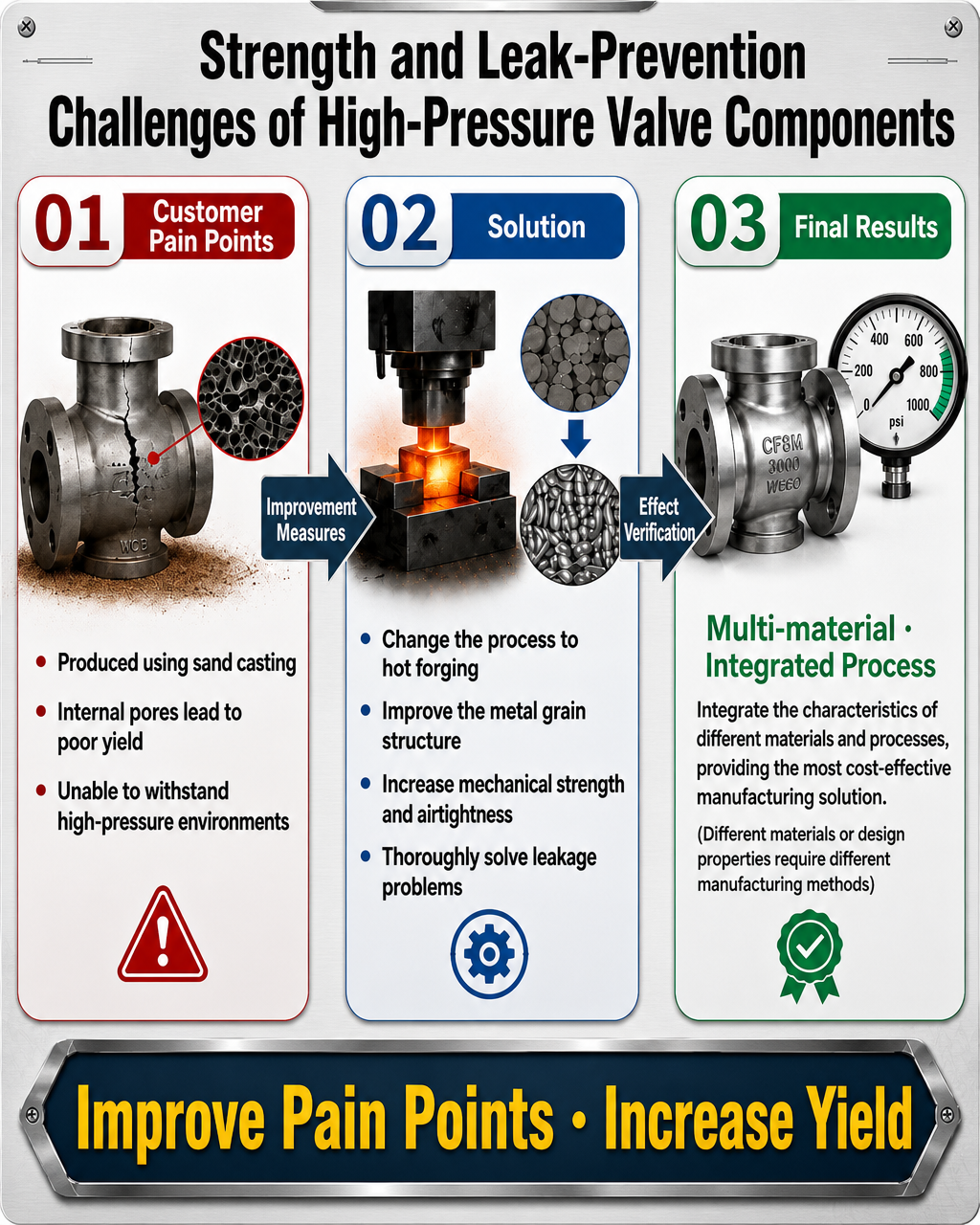
By forging, the metal grain structure is changed, significantly improving the mechanical strength and density of the part, thoroughly resolving the leakage issue.
Ultimately, by integrating the properties of different materials with the process, we provided the most cost-effective manufacturing solution and achieved improved yield.
- QCan JITO machine parts according to customer drawings?
AYes. JITO can evaluate based on customer-provided 2D drawings, 3D CAD files, or samples, and recommend a suitable process based on product material, dimensions, tolerances, application, and quantity.
- QIf I only have a sample and no drawings, can I still make an inquiry?
AYes. If the customer only has a sample, JITO can first conduct a preliminary evaluation based on the sample's appearance, dimensions, material, and functional requirements, and then discuss whether drawings need to be created, molds developed, or sample production arranged.
- QCan JITO handle small-quantity sample processing?
AWe can assist customers with sample development and trial production evaluation. However, whether small-quantity production is actually suitable still depends on the product structure, mold requirements, material, and processing method. If the product requires mold opening, JITO will also help customers evaluate the cost-effectiveness between sample and mass production.
- QWhat is the difference between copper casting, copper forging, and CNC machining?
ACopper casting involves pouring molten metal into a mold to form the shape, suitable for complex shapes or special structural parts. Copper forging uses pressure to shape the metal, suitable for parts requiring higher strength and stable mechanical properties. CNC machining uses computer-controlled tools for cutting, suitable for handling precise dimensions, holes, threads, and assembly surfaces.
JITO can help customers choose a single process or integrate multiple processes according to product requirements. - QCan JITO help with material selection?
AYes. JITO can help customers evaluate suitable copper alloys, brass, bronze, aluminum alloys, or other metal materials based on product application, usage environment, strength requirements, corrosion resistance requirements, conductivity, appearance, and cost.
- QWhat information is needed for a custom metal parts inquiry?
AWe recommend providing the following information to help JITO evaluate more quickly: product drawings or 3D files, material requirements, dimensions and tolerance requirements, surface treatment requirements, estimated quantity, product application, whether mold opening is needed, whether a sample already exists, and target delivery date.
If the information is not yet complete, you can provide the information you currently have, and JITO will help confirm what additional information is needed. - QDoes JITO offer OEM or ODM services?
AJITO can provide OEM metal parts manufacturing according to customer needs, and can also assist customers with ODM product development evaluation. Services include drawing confirmation, process recommendations, mold development, sample production, CNC machining, inspection, and mass production.
- QWhich industries are suitable for JITO's custom processing?
AJITO's custom metal processing services can be applied to water fittings, automotive and motorcycle parts, industrial machinery, household hardware, furniture hardware, coffee machine parts, electronic and electrical parts, outdoor hardware, and special metal part development.