- Excellent thermal and electrical conductivity
- High corrosion resistance
- Resistance to oxidation, acids, and alkalis
As global industries place increasing emphasis on energy efficiency and carbon reduction, lightweight design has become a core indicator in product development. Aluminum alloy forging offers an outstanding strength-to-weight ratio, making it an ideal solution for replacing heavy metal components and enhancing product performance. JITO specializes in high-precision aluminum alloy forging technology and provides customers with a one-stop solution covering material selection, forging, heat treatment, and CNC machining.
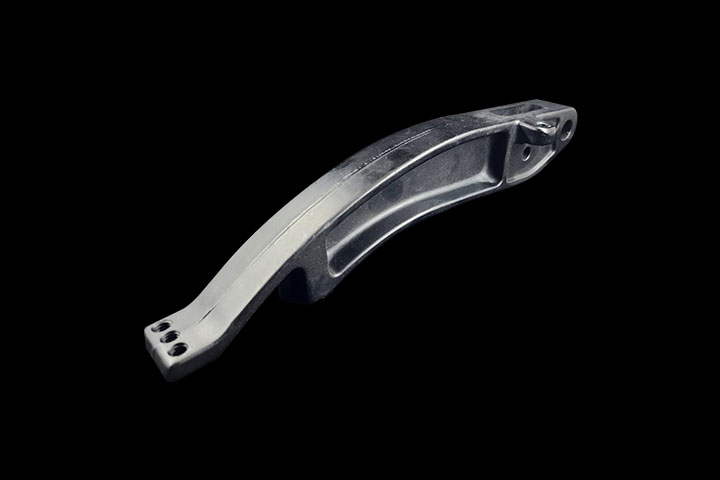
Compared with conventional cast aluminum, aluminum forged components undergo plastic deformation during forging, causing the internal grain structure of the metal to realign along the contours of the component and form a dense, continuous structure. This not only eliminates common casting defects such as shrinkage cavities and porosity but also provides components with excellent tensile strength and fatigue resistance, enabling them to withstand higher dynamic loads and cyclic stresses.
Our aluminum forging capabilities cover a wide range of high-grade aluminum alloys and are widely applied in industries where weight and safety are critical:
- Electric Vehicle (EV) and Automotive Lightweight Components
To meet the demand for extended driving range, automotive structural components are increasingly shifting toward aluminum forging. We assist customers in developing structurally complex, high-precision chassis components and motor components, ensuring exceptional structural rigidity while reducing weight. - High-End Bicycle and Sporting Equipment Components
In the competitive bicycle market, aluminum forged components represent a combination of durability and lightweight performance. Through precision mold design, we manufacture components with attractive appearances and robust structures while reducing unnecessary machining and material waste. - Industrial Sensors, Aerospace, and Fluid Control Components
The excellent corrosion resistance and heat dissipation properties of aluminum alloys make them an ideal choice for precision instruments and industrial valve components.